Some notes on motions to Labour conference 2022

The motions to Labour Party conference haven’t been officially released yet, but we’ve got hold of a copy of the motions document. We’ll put up the document when we can. This overview is far from comprehensive, but flags up some key issues and pieces of text. It was written very quickly so apologies for any errors. Feel free to email us at team@momentuminternationalists.org

Many left-wing motions have been ruled out of order, but there is still a lot of important stuff to argue and organise around, at and after the conference.

(There will also be emergency motions, for which the deadline was still open at time of writing this.)

Electoral reform

There are over a hundred motions on proportional representation / electoral reform – the bulk of them the model motion from Labour for a New Democracy. This is a large proportion of CLP submissions, way ahead of the next most popular headings the Conference Arrangements Committee has grouped motions under – the economy and housing – with about twenty each. Labour Left Internationalists supports PR as, all things being equal, more democratic than first-past-the-post; but this glut of motions seems a bit absurd, particularly given the crucial issues on which there is little text (eg anti-strike and anti-protest laws) or really nothing at all (eg Brexit, the police, international issues…) It is surely indicative of the problem that many have come to see electoral reform as a sort of magic bullet for the difficulties facing the left.

Credit to Glasgow Anniesland CLP for submitting a call for abolition of the House of Lords.

Motions ruled out

In a sign of the undemocratic way Labour is going, large number of motions have been ruled out of order. However, quite a few of the demands in motions ruled out have made it through in other motions. However, some of the stronger, sharper formulations have been eliminated, plus of course many CLPs will now be excluded from the compositing of motions, making the bureaucracy’s job easier.

Strikes and cost-of-living crisis

Motions ruled out include about a dozen calling on the party to support strikes, on the grounds that this is an “organisational matter”.

Two motions supporting strikes, from CWU and TSSA, have been allowed in (it’s not so easy to rule out trade union motions). The CWU formulation is fairly strong: “This conference gives its unequivocal support to all UK workers taking strike action for higher pay and in defence of their jobs, terms and conditions”. (Better of course if it didn’t say UK, but the meaning is not sinister.)

Unison has submitted a motion calling, among many other things, for pay rises at least in line with inflation, a £15 minimum wage, proper sick pay (its second, somewhat vaguer but still useful, motion is about refunding local government).

The motion from Leyton and Wanstead CLP welcomes the TUC’s call to raise Universal Credit to 80% of the national living wage, and the one from Northern Ireland straightforwardly supports this demand.

Anti-strike / anti-union laws

The only thing on the threat of new anti-union laws from Liz Truss’ government is one brief mention of a few words.

The sharp formulations on repealing all anti-trade union laws in the cost-of-living/strikes motion from Newark and Clacton CLPs – based on the text LLI promoted – have been lost because these motions have been ruled out on the supposed grounds they cover more than one topic. The motion from New Forest East usefully talks about the Thatcherite laws of the 80s, but unfortunately just refers in its resolves to “repealing anti-union legislation”. Part of the motion from South Ribble CLP is, whatever the intention, positively harmful in that it commits to “campaign for the repeal of the Trade Union Act 2016 and review all other anti-Trade Union legislation” – a big step back from the demand to repeal all anti-union laws repeatedly passed by the conference since 2015.

Climate change / Green New Deal

Climate is not far behind housing and the economy as a popular topic, and in fact several economy motions have a lot on climate change. But most climate motions have been ruled out of order. The motion promoted by Labour for a Green New Deal putting public ownership at the centre of tackling climate change has also been ruled out on the grounds of covering more than one topic. The leadership obviously feels more comfortable with the kind of motion that calls on the next Labour government to ban disposable barbecues (no, really; for some reason the CLP is noted listed). The motion from Delyn CLP refers to “policies… outlined in the Green New Deal motion agreed by conference in 2021”.

Public ownership

However motions calling for public ownership – including variously of water, Royal Mail, energy and rail – have been allowed in. This includes one from Barrow and Furness with some focus on climate. Six CLPs have submitted motions specifically on public ownership of energy (also referring to climate change); a gold star goes to Croydon South who call not just for a heavy tax on fossil fuel producers but heavy tax “pending public ownership” (ie of the fossil fuel companies specifically). Edinburgh North and Leith has a weak formulation saying Labour should “explore” public ownership of energy; similarly, Mansfield says public ownership should be “considered”.

Ukraine

The motion from the National Union of Mineworkers condemning Russia’s war, supporting the Ukrainian independence struggle and Ukraine’s labour movement, is good and very important. Unfortunately the more right-wing motions from Derby South, Hyndburn, Streatham and Holborn and St Pancras CLPs, and the GMB, link support for Ukraine to support for the NATO military alliance and higher UK military spending. Conference should be able to vote on support for Ukraine without having to support NATO and increased military spending.

Slightly startlingly, nothing else has been submitted on international issues.

Migrants’ rights / free movement

In addition to the very strong Labour Campaign for Free Movement-inspired motion from Cardiff North CLP, there are a number of worthwhile but much weaker motions on migrants’ rights, for instance arguing to “review” No Recourse to Public Funds rather than scrap it.

A motion from Camberwell and Peckham on resisting immigration raids has been ruled out as an “organisational matter”.

Housing

Labour housing campaigners have done well: there are lots of good motions on housing, with a range of strong demands – including ending “right to buy”, funding the building of at least 100,000 council homes a year, funding retrofitting, private sector rent controls and many others.

NHS and social care

There are some decent motions on the NHS and social care. But, very concerningly – uncharacteristically honestly for the right? – the motion from Rossendale and Darwen CLP says: “Labour should reject further NHS privatisation, except where it can be shown to improve outcomes in, for example, highly specialised care or pharmaceutical or clinical research.”

The police

There is nothing about curbing the police or holding them accountable (except a good motion about learning from the 1989 Hillsborough disaster); nothing about reforming criminal justice more widely; and hardly anything about defending and restoring the right to protest.

Brexit

Nothing about Brexit, despite the widespread unhappiness in the party with Starmer’s de facto support for the Tories’ hard Brexit.

Another mildly comical note: the Ukraine motion from Starmer’s CLP, Holborn and St Pancras, rightly supports Ukraine joining the EU – while Starmer works hard to prevent any criticism of Brexit and won’t even support the UK rejoining the Single Market…

Drugs

The motions from Clwyd West and Dundee City West CLPs on liberalising drugs laws and policies are also worth noting.
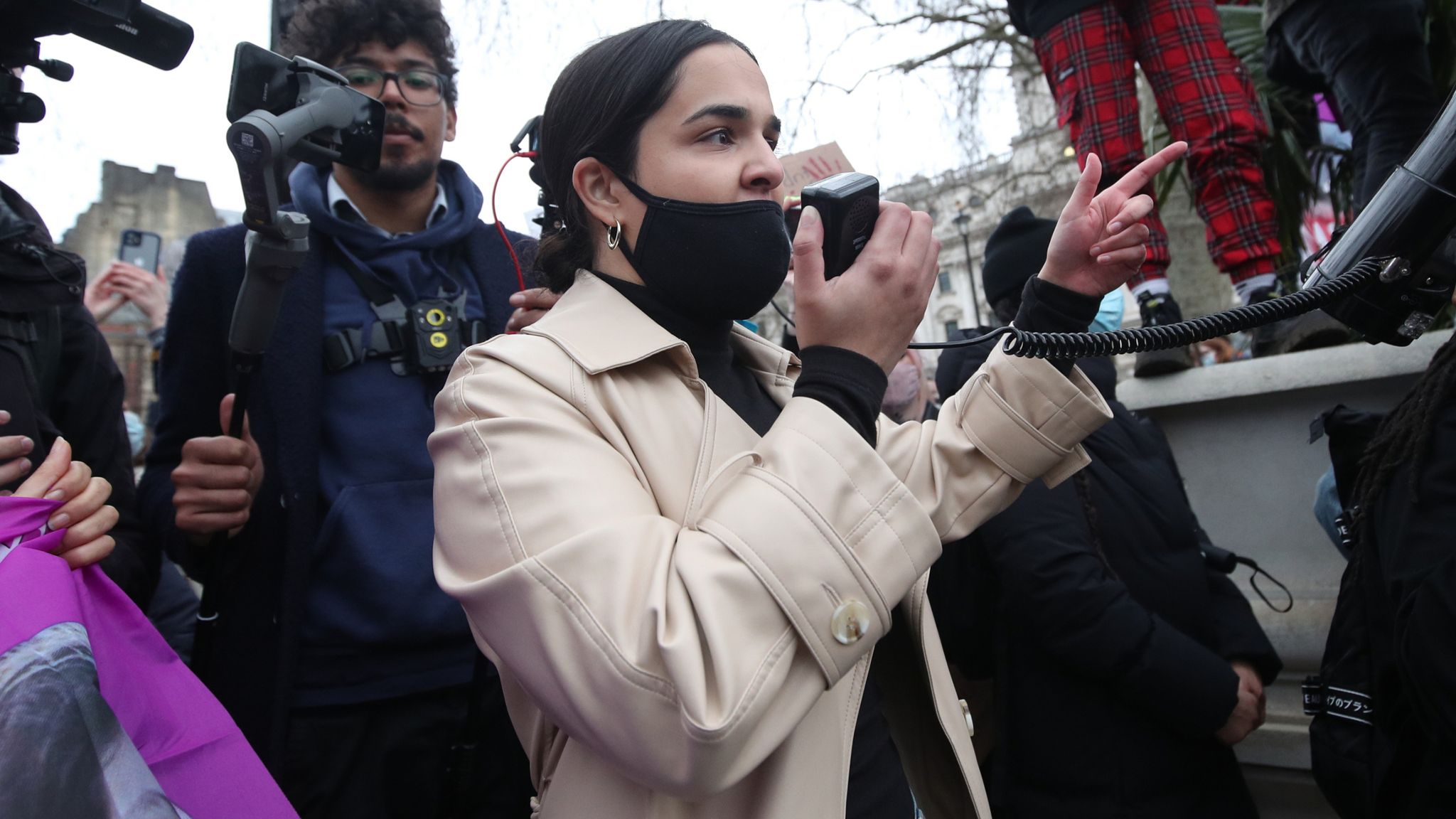
Nadia Whittome: “We need a mass movement for public social care”

Nadia Whittome: Britain's youngest MP to take 'several weeks' off work due  to post-traumatic stress disorder | Politics News | Sky News

This is the speech Nottingham East MP Nadia Whittome gave at the Progressive Economics conference at Greenwich University on 11 June.

Thank you for having me here. It’s an honour to share a panel with such eminent speakers. I’ve worked with the Women’s Budget Group for a long time now.

Since I was elected I’ve taken a real interest in social care, for two main reasons. Firstly it’s one of the biggest and most neglected areas of public policy; it’s a system that’s broken, and it’s full of abuse and hyper-exploitation – and yet there’s been almost no government action. Secondly, it’s where I come from. Before I was elected I was a care worker, and during the pandemic I went back to work in my old workplace.

I was employed again on a zero hours contract, doing highly skilled work, with unsocial hours, often quite unpleasant work and of course, during the pandemic, extremely risky work – and all without adequate PPE. I spoke about that in a Newsnight interview, and I was then sacked from my role, even though I didn’t name the company I work for.

Obviously the sacking and loss of wages don’t really matter in my case because I’m an MP. But it shows just how badly people are treated, all over the country, all of the time. After this I did a call out to care workers; we got hundreds of responses from every corner of the four nations, saying the same kind of things.

Care workers are disproportionately migrants, and overwhelmingly women workers. The median wage for a care worker in 2021 was £9.01 an hour. 71% of care workers are paid below a real living wage. Zero hours contracts are the norm. Minimal is the norm – so when it came to my colleagues contracting Covid or having to self-isolate due to contact, they were basically being asked to live on fresh air.

This is where I want to start – because usually when we have these discussions about social care we start from a policy perspective, but we should also be talking about this from the perspective of rank-and-file workers. Workers – and care-recipients as well – are better at designing the kind of care service we need; and we’re certainly not going to get the kind of system we need until we put an end to Dickensian pay and conditions.

The left is clearly a long way from power. We need to build trade union density and militancy in this sector (and other sectors as well of course). There have been some really good campaigns here and there. In Salford there has been a campaign to pay workers the living wage and bring them in house. Of course there’s the Sage care workers, who went on strike and won the living wage.

But this doesn’t yet amount to the general, across the board unionisation we need to see to drive up pay and conditions.

In general, not enough is being done to unionise precarious and migrant workers. On the other, those workers are leading some of the most inspiring struggles. The Sage workers, for instance, are predominantly precarious migrant workers.

We do also need to make wider demands on the government, first off to intervene in wages. The demand for a £15 an hour minimum wage would mean a more than 50% increase for the vast majority of care workers.

When the care sector bosses say they can’t afford this, it’s exactly the same as when energy companies talk about not being able to afford things. What that means is they will make less profit. That is what not being able to afford things means when we’ve got profit-making companies running fundamental public services. We need to look at that big picture.

In Labour’s 2019 manifesto, which I was proud to run on, we put arguably the most radical and progressive social care policy to the electorate. That was a national care service that would be free at the point of need. The initial phases of establishing that would have been driving up standards of care and also terms and conditions with a big injection of public money, free personal care for elderly people, and rebuilding local authorities’ capacity so we can start bringing care back in house, so these corporations are no longer creaming off public money to provide a basic service.

In Scotland, they’re ahead of England on this. The details are unclear, but two things we know. One is that pay and conditions for social care nursing staff will be the same as in the NHS. Secondly they’re introducing national collective bargaining for the first time ever, which is game-changing for the sector.

Polling shows strong public support for these kind of changes, but unfortunately that’s not translating into serious policy change. You can see that in what the Tories’ proposed last year. Basically reducing the cap to £86,000 a year, so if your house is worth less than that, which is a lot of people’s houses in the Midland and the North, you’ll still need to sell it to pay for care. Meanwhile the national insurance hike will provide very little money for social care.

Even if it wasn’t morally bankrupt, and designed to protect the assets of the wealthy, this policy would still just be tinkering around the edges. I think fundamentally we shouldn’t have profit-making providers in social care; just as in the energy sector the public can’t be affording to bankroll shareholders’ lifestyles, exactly the same in care sector.

I believe in the principle of universality. Even if someone can afford to pay because they’re paying for their collection of vintage cars or whatever, I don’t think they should be. I think that profit poisons the system, it makes care worse. I’ve seen that first hand from working in the system. You just cannot reform social care meaningfully without being radical. This is a systemic issue. It’s an issue of women’s work, caring work and social reproduction, being systematically devalued by capitalism.

The Tories obviously can’t be radical on this, because they’re so wedded to the privatisation they started pursuing in the 1980s. We’ve got to look to the Labour Party. Labour Party conference last year, again, passed a motion for a national care service, which at the time was supported by Jonathan Ashworth, who was then shadow health secretary. That would have removed profit from the care system, it would have introduced national collective bargaining and it would have introduced a £15 minimum wage for care workers.

I do really worry that the Labour Party has its hangs up on this. I don’t think that’s because the front bench really ideologically believe the private sector should have a major role. It’s more about retreating from the 2017 and 2019 manifestos, and being seen to do that. If we do that we risk being outflanked by others on it.

Both public pressure and grassroots organising are more important than ever. The public agrees that the system is broken, we’ve got the policy – broadly – to change the system, and we know that that policy is popular. The missing ingredient is a grassroots, with mass unionisation, mass mobilisation, and the ability to push the policy agenda from outside across all parties, but also inside the Labour Party. That is the kind of bottom-up grassroots movement I want to help build and that all of us have a role in building.

Motion for Labour conference on cost-of-living crisis, wages, strikes

If you want to propose a motion to Labour Party conference (25-28 September, Liverpool) on the current wave of attacks on the working-class living standards, and the growing wave of resistance, please use or adapt this text. (Remember you must stick to 250 words, and 10 for the title.) To let us know if you do, or to get help: team@momentuminternationalists.org. The deadline to submit is 15 September.

If you can’t send this motion to conference, please pass in your CLP anyway, adapting as appropriate. You might consider adding to the “resolves” section, to promote local mobilisation in support of strikes and protests.


The cost-of-living crisis, unions and Labour

Conference notes:
1. That millions face real-terms pay cuts – after a decade of wage stagnation or cuts – and many plunging into dire poverty, while profits soar and the rich get even richer.

Conference believes:
1. That people need permanently higher incomes: higher wages and benefits. Surging inflation also means services need much more funding, particularly after years of cuts.
2. That we must demand companies cut profits to raise pay, and the rich and corporations are taxed to save and rebuild public services, including increased public-sector pay and benefits.
3. That workers and unions are right to campaign for at-least-inflation pay rises, to defend and improve conditions, and defend jobs.
4. That strikes are essential to this. As a party of the labour movement, Labour at every level – including our leadership and MPs – must actively support strikes.
5. That we must fight to repeal all the Thatcher-era and recent laws hindering unions and strikes, in line with conference policy.

Conference resolves:
1. That Labour must campaign for:
Improved pay and conditions, including urgent at-least-inflation pay and benefit rises;
Higher taxes on profits and the incomes and wealth of the rich to fund a rebuilt public sector, including at-least-inflation and soon restorative pay rises;
Increased benefits; immediately raising Universal Credit £40 a week, then increasing to £260 (TUC demand);
Immediately raising the minimum wage to London Living Wage-level, removing differentials and exemptions, £15ph by 2024;
Repealing all anti-union laws.
2. That the whole party should actively support strikes and workers’ struggles.

(250 words)

Motions for Labour conference 2022: Nationalise energy; Migrants’ rights; Curb the police

We are supporting the following motions for Constituency Labour Parties to send to Labour conference 2022. The deadline for CLPs to submit is 15 September. To let us know you’ve passed one or for help, email team@momentuminternationalists.org

Public ownership of energy

Migrants’ rights and free movement

Curb the police, defend and extend the right to protest

Motion: “Support the strikes. Cut profits, tax the rich, raise wages”

Please use or adapt this motion for your Labour Party (or union branch or other organisation).Get help or let us know: team@momentuminternationalists.org

Support the strikes. Cut profits, tax the rich, raise wages

Notes that:
1. Millions face real-terms pay cuts – after a decade of wage stagnation or cuts for most.
2. Over many years, and particularly the last two, profits have soared and the rich got even richer.

Believes that:

1. What people need urgently is not one-off payments, necessary as those may be, but higher incomes, ie higher wages and benefits.
2. Our movement must demand companies cut profits to raise pay; a significantly higher minimum wage; and that the rich and corporations are taxed to fund rebuilt public services, including increased public-sector pay and increased benefits. Failing to demand this means accepting the working class should suffer more.
3. Workers and unions are right to campaign for urgent at-least-inflation pay rises, to defend and improve conditions, and to defend jobs.
4. Strikes are essential to this. As a party of the labour movement, Labour at every level must actively support strikes. Every Labour MP must speak out in support and join picket lines.
5. We must demand repeal of all anti-strike / anti-union laws, in line with our conference policy.

Resolves to:
1. Call for Labour to campaign for: improved pay and conditions for all workers, including urgent at-least-inflation pay rises; reduction of profits to do this; an immediate increase in the minimum wage to at least £11ph, increasing to £15ph by 2024; taxation of the wealth and incomes of the rich and corporate profits to fund a rebuilt public sector, including at-least-inflation and soon restorative pay rises, and greatly increased benefits; and repeal of all anti-union laws.
2. Actively support strikes and mobilise members for picket lines.
3. Call on the whole party, all Labour MPs [including ours…] and the leadership to actively support strikes and attend / encourage attendance at picket lines.
4. Send this motion to the NEC and publish it.

What the labour movement should demand in an “emergency budget”

The Observer reports that Keir Starmer and Rachel Reeves “have concluded that big measures are needed” to deal with the cost-of-living disaster. What measures are big enough to make a real difference?

“[We need] an immediate emergency budget tackling the spiralling cost of living, [former prime minister] Gordon Brown has said… With pressure growing for action, senior Labour sources have confirmed to the Observer that the party is preparing to back a key intervention designed to curb the winter crisis, in addition to the removal of VAT on energy bills that it has already supported.

“Labour leader Keir Starmer and Rachel Reeves, the shadow chancellor, have not yet finalised the package, but have concluded that big measures are needed. ‘We recognise that this is an emergency situation and that requires a response that matches the moment,’ said a senior Labour source.”

(This is typical of how the Labour Party functions. Policies are not something to be debated and decided by the membership or in fact any of the leadership bodies of the party – or indeed in any meaningful dialogue with “the public”, despite politicians’ demagogy about that. They are decided, hinted at, leaked and declared by the party leader, his closest lieutenants and their staff.

(Labour Party policy should be decided by the representatives of members and affiliated unions. How? At Labour Party conference. Conference policy provides a solid basis for party stances. When urgent decisions are required, the National Executive Committee should decide. Only on that basis can Labour become anything like a real, living political party and movement. But all too often the left and the unions fail to fight for this.)

More immediately: it seems extremely likely Starmer and Reeves’ idea of what constitutes “big measures” does not in fact match the desperate reality of the moment. What should labour movement and socialist activists demand and, so far as we can, push for Labour to advocate?

• Major increases to benefits, the minimum wage and public-sector pay, plus full-throated and active support for union action to beat inflation and drive up pay in the private sector – including strikes – are the minimum necessary for those in Labour at all serious about tackling this emergency.

• One-off payments to help people through the immediate impact as energy bills leap again in autumn are obviously necessary. We should demand they are significantly more generous. However, what people need is not one off-payments but higher incomes. In terms of immediate policy changes in an emergency budget, that demands:

• Raise the minimum wage significantly. A growing range of labour movement organisations – including Labour Party conference last year – have called for a minimum of £15 an hour. To even maintain its value against inflation, the minimum wage needs to go up from £9.50 to about £10.60 immediately; and it was very low before the price-surge began. We need a major jump, the removal of differential rates and exemptions, and a fast timetable to progress to £15.

• Extra funding to provide at-least-inflation pay rises for all public sector workers, plus flat-sum increases at the bottom to raise the lowest-paid most.

• The value of unemployment benefit in its various forms has steadily declined over decades, from well over 30% in the 1960s to under 15% today. Without that fall the value of Universal Credit at the standard rate would be close to £700 a month, rather than £334.91. The TUC has called for UC to be raised to 80% of the real living wage; when they first raised this in 2020 that was £260 a week, over £1100 a month. Yet Labour has not even committed to restoring the £20 a week the Tories gouged out this year. Without that UC payments too will lose value against inflation. All benefits need significant increases.

Those kinds of measures, which of course will be stigmatised as unrealistic, hard left, etc, are really the bare minimum to defend and start to improve living standards in this crisis.

Additionally, a Labour Party serious about fighting poverty and inequality would announce proposals to:

Repeal all the laws hindering trade unions and strikes.

Take the energy companies into public ownership, with a plan to slash bills.

• Launch a major council house building programme.

• Restore all the funding taken from local government.

Contrary to Keir Starmer’s absurd comments about there being no “magic money tree”, corporate profits and the personal wealth of the rich have soared. Closing tax loopholes and levy windfall taxes is fine, but – again as a bare minimum – we need much higher taxes on business profits and the income and wealth of the rich (combined with tax reductions for workers and the poor), to fund an assault on poverty and slash undemocratic and socially destructive inequality.

Dave Levy for Labour National Policy Forum!

We urge Labour members to support Dave Levy, who is standing for the National Policy Forum in London.

Dave, who is secretary of Lewisham Deptford CLP in SE London, is a militant internationalist, a trade unionist (GMB) and a longstanding campaigner for democracy in the party. (Read his blog here.) He told us:

“No Labour Government has been more left-wing than its manifesto; that’s why Labour’s programme and manifesto matter! All this ‘without power we can make no change’ hides the other side of the coin: ‘without ambition we will make no change’! I will work to ensure that the membership voice makes policy. I will work hard and report back. I’m proud to be supported by the CLGA and Momentum.”

Dave is part of the left-wing slate backed by the Centre-Left Grassroots Alliance Coalition and Momentum.

The National Policy Forum is typically used to muddy Labour policy, allowing the leadership to water-down or ignore decisions made by conference. It is important to have pro-democracy left-wingers on it who will fight for conference policy to be carried out and developed.

Sheffield Heeley motion on Labour, the strikes and Sam Tarry

The following motion was passed with all votes for except two abstentions at Sheffield Heeley Constituency Labour Party on 28 July.


  1. This CLP condemns the Labour Leadership’s position in choosing not to attend picket lines. We particularly condemn the order to the Shadow Frontbench Members not to attend the picket lines of the National Union of Rail, Maritime and Transport Workers (RMT).
  2. This CLP supports the actions of many Labour MPs, Labour Councillors and Labour Party Members in attending the RMT and Transport Salaried Staffs’ Association (TSSA) picket lines on 27th July 2022.
  3. The CLP strongly condemns the decision of the Labour Leader to sack Sam Tarry, a Shadow Minister for Transport after he joined an RMT and TSSA picket line on 27 July 2022. We do not accept the Labour Leader’s comments in the print and broadcast media on 27th and 28th July 2022 that Sam Tarry was making up party policy “on the hoof”, especially considering the confused and contradictory statements made by the Labour Leadership in the media regarding our Party’s policy on nationalising of the railways made on Monday 25th July 2022.
  4. This CLP further believes that the actions of the Labour Leadership in respect of the above has damaged both Members and public’s confidence that our Party is a government in waiting.
  5. This CLP affirms our previous Resolution of 26th May 2022,
    overwhelmingly passed, regarding the announcement of the RMT ballot result to take industrial action and our resolution to :
    – to send a message of support to the RMT, including inviting a speaker to address a future CLP meeting and asking the union what support we can offer.
    – to actively support any strike action through attending picket lines with our banner, discussing donating to a strike/ hardship fund if the RMT establishes this and by encouraging solidarity from our member
    – to call on our MP to show solidarity including attending picket lines.
    – to call on our party nationally to support this struggle including any strike action
  6. This CLP demands that the whole party rallies around the rail workers – and other workers in struggle – by supporting strikes, not hiding away from them and punishing people for supporting them.
  7. This CLP Resolves:
    a) To call on all Labour MPs, including our MP, Louise Haigh, to support the RMT and other striking unions in rail and other industries, and join future picket lines;
    b) To send and publish a message to the rail unions supporting their struggles and their strikes;
    c) To send a copy of this motion to the Labour NEC General Secretary and NEC CLP Representatives.